
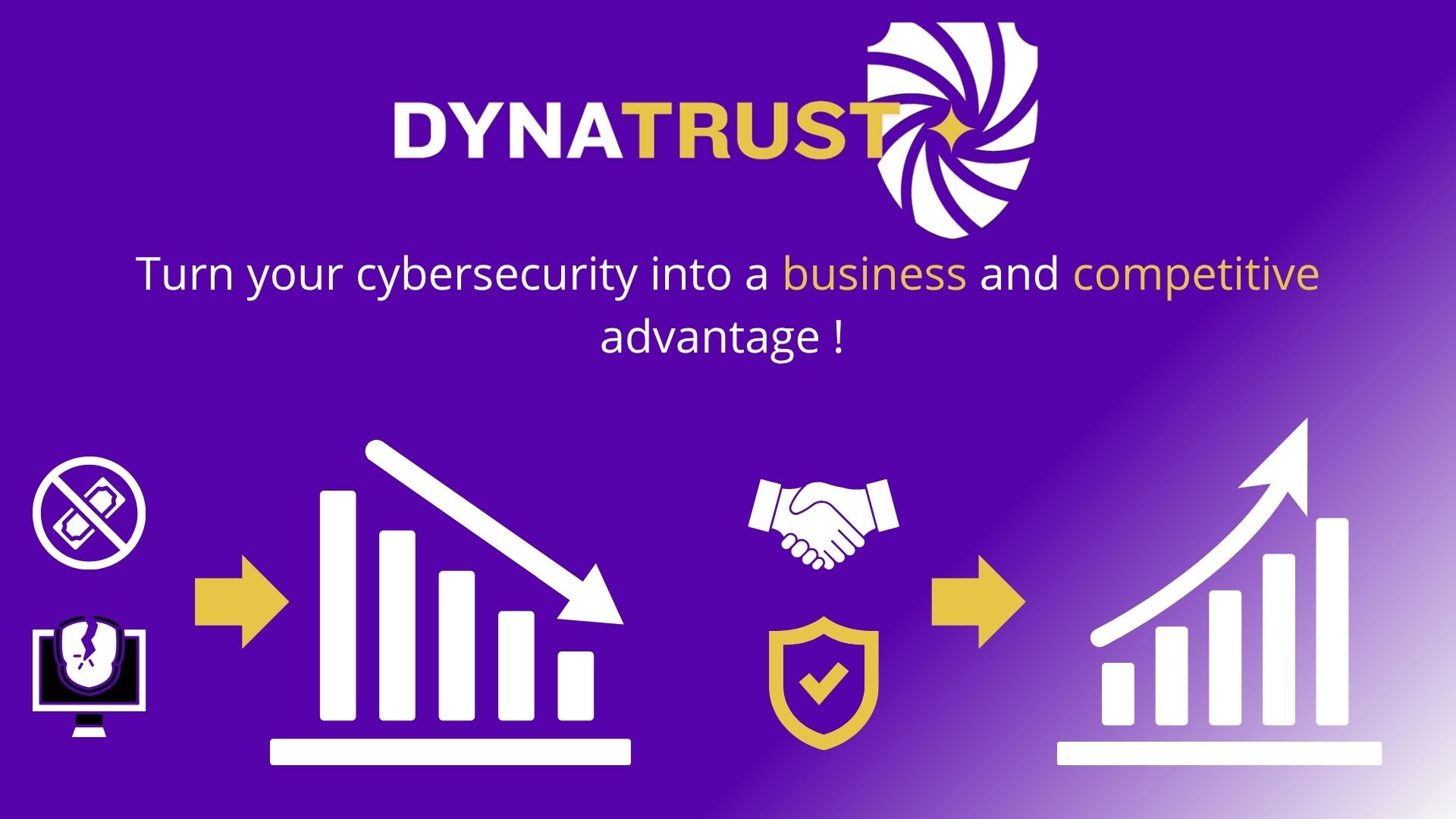
In a world where 67% of French companies experienced at least one cyberattack in 2024 and where cybercrime losses amount to €118 billion in France, cybersecurity regulatory compliance is no longer a mere administrative requirement. It has become a strategic lever that opens new markets and increases competitiveness in tenders.
For executives, CIOs, and CISOs, understanding how to turn compliance investments into competitive advantages is now essential. Far from being a cost center, mature cybersecurity governance delivers measurable business benefits: enhanced customer trust, access to new markets, reduced operational costs, and strategic differentiation. Discover how to turn compliance into a growth engine for your organization.

From Regulatory Constraint to Strategic Opportunity
Traditionally seen as a regulatory burden, cybersecurity compliance is undergoing a deep transformation. High-performing organizations no longer aim for minimal requirements—they go beyond standards to turn them into a strategic differentiator.
This shift is driven by market evolution. Customers, partners, and investors now include cybersecurity maturity in their selection criteria. According to the academic study “Managerial Insights on Investment Strategy in Cybersecurity” conducted by a consortium of researchers (UK, US, Europe) and published on Cornell University’s scientific preprint platform, “Companies that view cybersecurity as a strategic driver show more sustainable growth and stronger customer trust.” (Based on 1,083 participants, mostly executives and senior managers from large and mid-sized international companies.)
As a result, IT security policies are becoming sales arguments, especially in sensitive sectors such as finance, healthcare, and industry. Companies that understand this dynamic are transforming compliance investments into growth levers.
The Business Stakes of Modern Compliance
Business implications of compliance extend far beyond avoiding fines—they lie at the heart of corporate strategy:
Access to regulated markets : Many industries require specific compliance levels. Without ISO 27001 certification or ExpertCyber qualification, certain public or private tenders are simply inaccessible.
Stakeholder trust : Investors, insurers, and financial partners increasingly demand proof of cyber resilience. Documented and audited cybersecurity governance facilitates fundraising and reduces insurance costs.
Value protection : A cyberattack costs a French SME an average of €466,000, sometimes up to 10% of its annual turnover. Compliance significantly reduces this risk and protects corporate value.
Operational efficiency : A structured compliance framework optimizes IT processes, reduces incidents, and improves service availability—yielding measurable productivity gains.
Compliance as a Differentiation Lever
Winning New Markets through Certifications
Compliance certifications literally open commercial doors. In complex tenders, they are often eliminatory or heavily weighted criteria.
ISO 27001 certification is the international gold standard. It demonstrates that an organization has a robust and regularly audited Information Security Management System (ISMS). For B2B companies, it is a mandatory credential for engaging with large clients.
Sector-specific qualifications such as SecNumCloud or ExpertCyber meet tailored requirements, granting access to high-value niche markets with limited competition.
Trust labels such as the France Cybersecurity Label or ANSSI’s CSPN certifications strengthen technical credibility and facilitate international growth, particularly in institutional markets.
Standing Out in Public and Private Tenders
Tenders increasingly integrate stringent cybersecurity criteria. Compliant organizations gain decisive competitive advantages:
Faster response : Maintaining up-to-date compliance documentation (IT security policies, business continuity plans, cybersecurity audit reports) allows for quick responses, saving critical time against competitors.
Higher scoring : Evaluation grids often allocate 15–25% of the total score to security criteria. Demonstrated cyber maturity can tip the balance between technically equivalent bids.
Reduced contractual negotiation : Many clients demand strict cybersecurity clauses. Being already compliant avoids lengthy, costly negotiations and accelerates deal closure.
Automatic prequalification : Some major clients maintain prequalified supplier lists based on compliance standards. Inclusion provides privileged access to business opportunities.
Turning Cyber Governance into a Competitive Advantage
Building Differentiated Cybersecurity Governance
A mature cybersecurity governance framework goes beyond ticking regulatory boxes. It integrates into the business strategy and creates value across the organization.
Strategic alignment : Effective governance links cybersecurity to business goals. The executive board understands how security investments protect critical assets and enable growth ambitions.
Operational transparency : A well-designed cybersecurity dashboard provides real-time visibility into risks and performance. This transparency reassures clients during due diligence and strengthens strategic partnerships.
Reducing Costs and Enhancing Operational Efficiency
Compliance generates often underestimated savings that directly impact profitability:
Fewer incidents : 46% of cyberattacks exploit human error. Mature governance—including training, awareness, and technical controls—significantly reduces incident rates, saving crisis management and recovery costs.
Optimized insurance premiums : Cyber insurers offer 20–40% discounts to companies certified under ISO 27001 or demonstrating mature practices. On a €100,000 annual premium, that’s €20,000–€40,000 in yearly savings.
Process efficiency : Compliance frameworks enforce documentation and standardization. This rigor eliminates redundancies, accelerates deployments, and reduces operational errors—often saving several man-days per month.
Avoiding sanctions : Regulatory fines (GDPR, NIS2, DORA) can reach millions of euros. Proactive compliance eliminates these financial risks while preserving corporate reputation.

Protecting and Enhancing Intangible Capital
Intangible assets (data, know-how, reputation) often represent over 80% of a modern company’s value. Cybersecurity compliance protects and enhances these critical assets.
Protecting intellectual property : Structured cyber risk management identifies and safeguards strategic assets (patents, trade secrets, customer databases), preserving competitive advantage and valuation during fundraising or acquisitions.
Reputation management : 47% of companies lose prospects and 43% lose customers after a cyberattack. Visible compliance reassures the market and limits reputational damage. Communicating about cyber maturity becomes a strategic asset in itself.
Practical Tips to Build Cyber Competitive Advantage
• Conduct a strategic compliance assessment (mapping, maturity evaluation, competitive gap analysis).
• Build a business-oriented compliance roadmap (targeted certifications, resource allocation, phased investments).
• Deploy a differentiated communication strategy (value demonstration, ecosystem engagement, transparency).
Common Compliance Pitfalls to Avoid
• Minimal compliance — a strategic trap : It leads to weak differentiation, vulnerability to evolving standards, and missed commercial opportunities.
• Neglecting human and cultural factors : Lack of awareness, resistance to change, and poor internal communication can derail even the best frameworks.
Conclusion: Turn Compliance into Your Secret Weapon
Cybersecurity regulatory compliance is far more than an administrative requirement—it’s a strategic lever that transforms your organization into a trusted market leader.
In an era where cybersecurity has become a decisive selection criterion, organizations that go beyond minimal standards gain a lasting competitive edge.
The benefits are measurable and multifaceted: access to new markets, increased tender success, lower operational costs, protection of intangible assets, and commercial differentiation. Far from being a defensive investment, compliance becomes a growth engine that opens business opportunities otherwise out of reach.
Success lies in a strategic approach—aligning compliance investments with business priorities, communicating achievements effectively, and measuring ROI rigorously.
Organizations embracing this vision turn regulatory constraints into competitive advantages and gain a clear lead in their market.
Is your company ready to turn cybersecurity compliance into a competitive edge?
Our cyber governance experts can guide you through this strategic transformation. Contact us today to assess your current maturity and discover how to leverage compliance investments to win new markets and strategic tenders.
Benefit from our recognized expertise in cybersecurity auditing and regulatory compliance to accelerate your transformation into a trusted digital leader.
